
Table of Contents
If you’ve ever wondered how many calories to lose 1kg fat, you’re not alone. It’s one of the most searched fitness questions—and surprisingly, one of the most misunderstood.
Most people assume fat loss is simple: eat less, move more, and the weight drops. But here’s the truth—losing 1kg of fat isn’t just about cutting calories randomly. It’s about understanding how your body uses energy, how fat is stored, and how to create a sustainable calorie deficit that actually works.
In this guide, we’ll break down:
- The exact number of calories in 1kg of fat
- How long it really takes to lose it
- The smartest way to burn fat (without burning out)
- And the biggest mistakes holding people back
How Many Calories to Lose 1kg Fat (The Real Science Explained)
Understanding how many calories to lose 1kg fat starts with one key principle: energy balance.
Your body stores fat as energy. When you consume fewer calories than you burn, your body taps into these fat stores to make up the difference. This is known as a calorie deficit—and it’s the foundation of all fat loss.
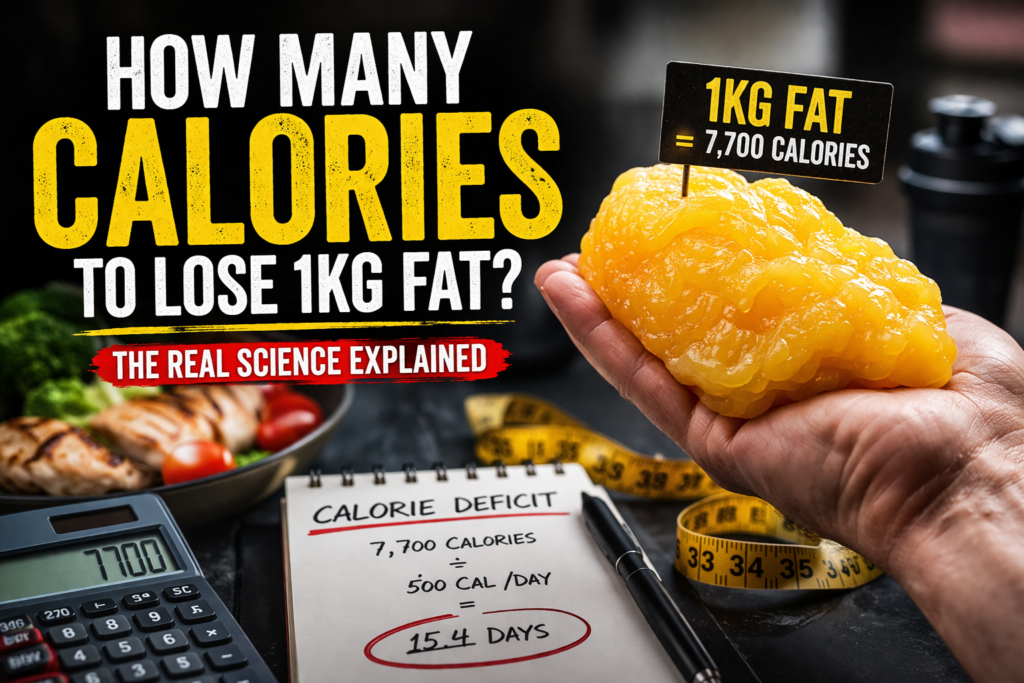
What Is 1kg of Body Fat in Calories?
1 kilogram of body fat contains approximately:
👉 7,700 calories
This means:
- To lose 1kg of fat → you need a 7,700 calorie deficit
But here’s where people go wrong…
Why Most People Miscalculate Fat Loss
Fat loss isn’t perfectly linear. Several factors influence how your body burns fat:
- Water retention can mask fat loss
- Metabolic adaptation slows calorie burn over time
- Muscle gain may offset scale changes
- Hormones and sleep impact fat-burning efficiency
So while the 7,700 rule is a great guideline, your real-world results may vary slightly.
👉 The key takeaway?
Fat loss is predictable—but not perfectly precise.
How to Create the Right Calorie Deficit to Lose 1kg Fat
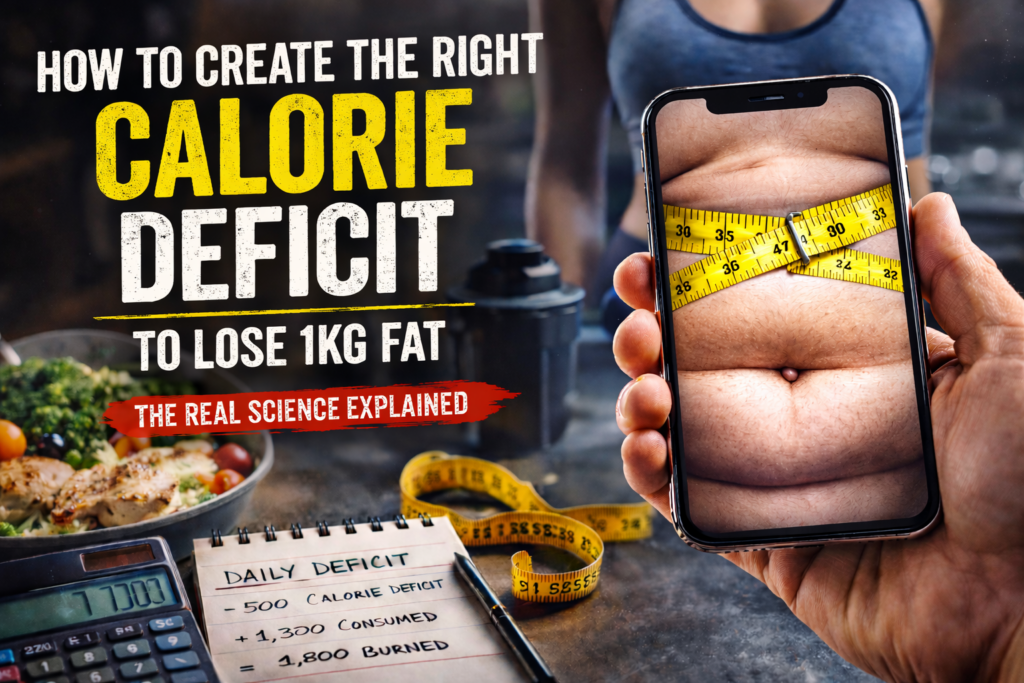
Now that you know how many calories to lose 1kg fat, the next step is creating the right deficit.
Daily Calorie Deficit Breakdown
Instead of trying to burn 7,700 calories at once (bad idea), break it down:
| Daily Deficit | Time to Lose 1kg Fat |
|---|---|
| 500 calories/day | ~15 days |
| 700 calories/day | ~11 days |
| 1,000 calories/day | ~7–8 days |
👉 The sweet spot?
500–700 calories/day for sustainable fat loss.
How Long It Takes to Lose 1kg Fat
Realistically:
- Beginners → faster results
- Advanced individuals → slower progress
On average:
👉 1kg of fat loss = 1–2 weeks
Trying to rush this often leads to:
- Muscle loss
- Fat regain
- Burnout
👉 Slow = sustainable = successful

Best Ways to Burn Calories Efficiently
If your goal is to lose 1kg fat efficiently, not all calorie-burning methods are equal.
Cardio vs Strength Training for Fat Loss
Cardio:
- Burns calories quickly
- Great for creating deficits
- Examples: running, cycling, swimming
Strength Training:
- Builds muscle
- Increases metabolism
- Burns calories even at rest
👉 Best approach?
Combine both
Non-Exercise Activity (NEAT)
NEAT = calories burned outside the gym:
- Walking
- Standing
- Daily movement
This is often overlooked—but powerful.
👉 Fun fact:
NEAT can burn hundreds of calories daily without formal exercise.
Nutrition Strategies to Lose 1kg Fat Faster
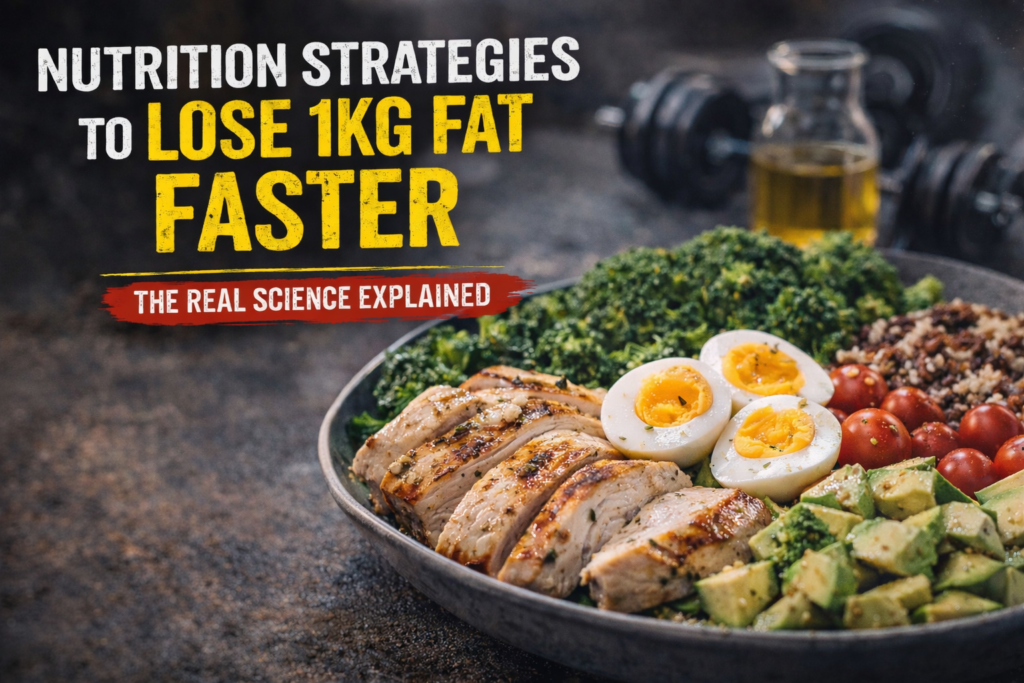
Fat loss isn’t just about calories—it’s about what you eat.
High Protein Diet Benefits
Protein is your best friend when trying to lose 1kg fat:
- Keeps you full longer
- Preserves muscle
- Boosts metabolism
👉 Aim for:
1.6–2.2g protein per kg body weight
Foods That Support Fat Loss
Focus on:
- Lean meats
- Eggs
- Vegetables
- Whole grains
- Healthy fats
Avoid:
- Ultra-processed foods
- Liquid calories
- Sugar-heavy snacks
👉 Bonus tip:
Whole foods increase the thermic effect of food, meaning your body burns more calories digesting them.
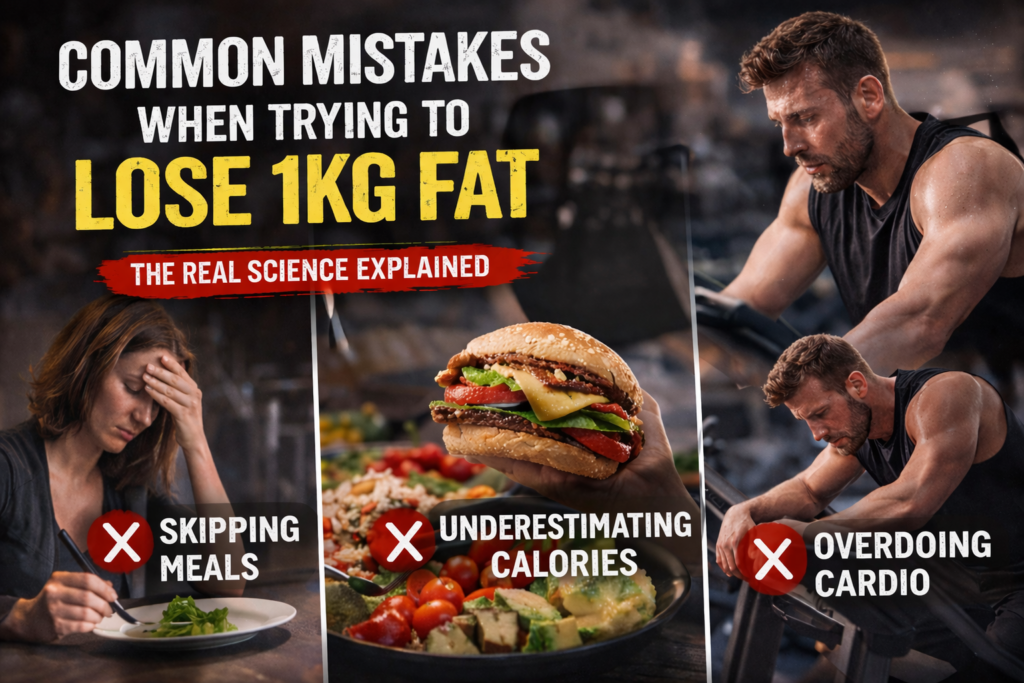
Common Mistakes When Trying to Lose 1kg Fat
Even if you understand how many calories to lose 1kg fat, mistakes can slow you down.
Crash Dieting
Cutting calories too aggressively leads to:
- Muscle loss
- Slower metabolism
- Rebound weight gain
👉 If it feels extreme—it probably is.
Overestimating Calories Burned
Many people think they burn more than they actually do.
Examples:
- “I ran for 20 minutes—I burned 500 calories” ❌
- Reality: closer to 200–300 calories
👉 Solution:
Track honestly. Stay consistent.

How a Personal Trainer Helps You Lose Fat Faster
f you want faster, more reliable results, working with a personal trainer in Paphos can make a huge difference.
Customized Plans
A coach will:
- Calculate your calorie needs
- Design workouts for fat loss
- Adjust based on progress
No guesswork. Just results.
Accountability & Results
Consistency is the hardest part.
A trainer helps you:
- Stay on track
- Stay motivated
- Avoid common mistakes
👉 That’s often the difference between:
- “Trying to lose weight”
- Actually losing it
❓ FAQs About Losing 1kg of Fat
How many calories to lose 1kg fat safely?
Around 7,700 calories, ideally spread over 1–2 weeks.
Can you lose 1kg fat in a week?
Yes—but it requires a large calorie deficit and isn’t always sustainable.
Is 7,700 calories accurate?
It’s a scientifically accepted estimate, though individual results may vary slightly.
What burns fat fastest?
A combination of: Strength training, Cardio, and a High-protein diet
Do you need cardio to lose fat?
No—but it helps accelerate calorie burn.
Why am I not losing fat in a deficit?
Possible reasons: Inaccurate tracking, Water retention, and Metabolic adaptation